


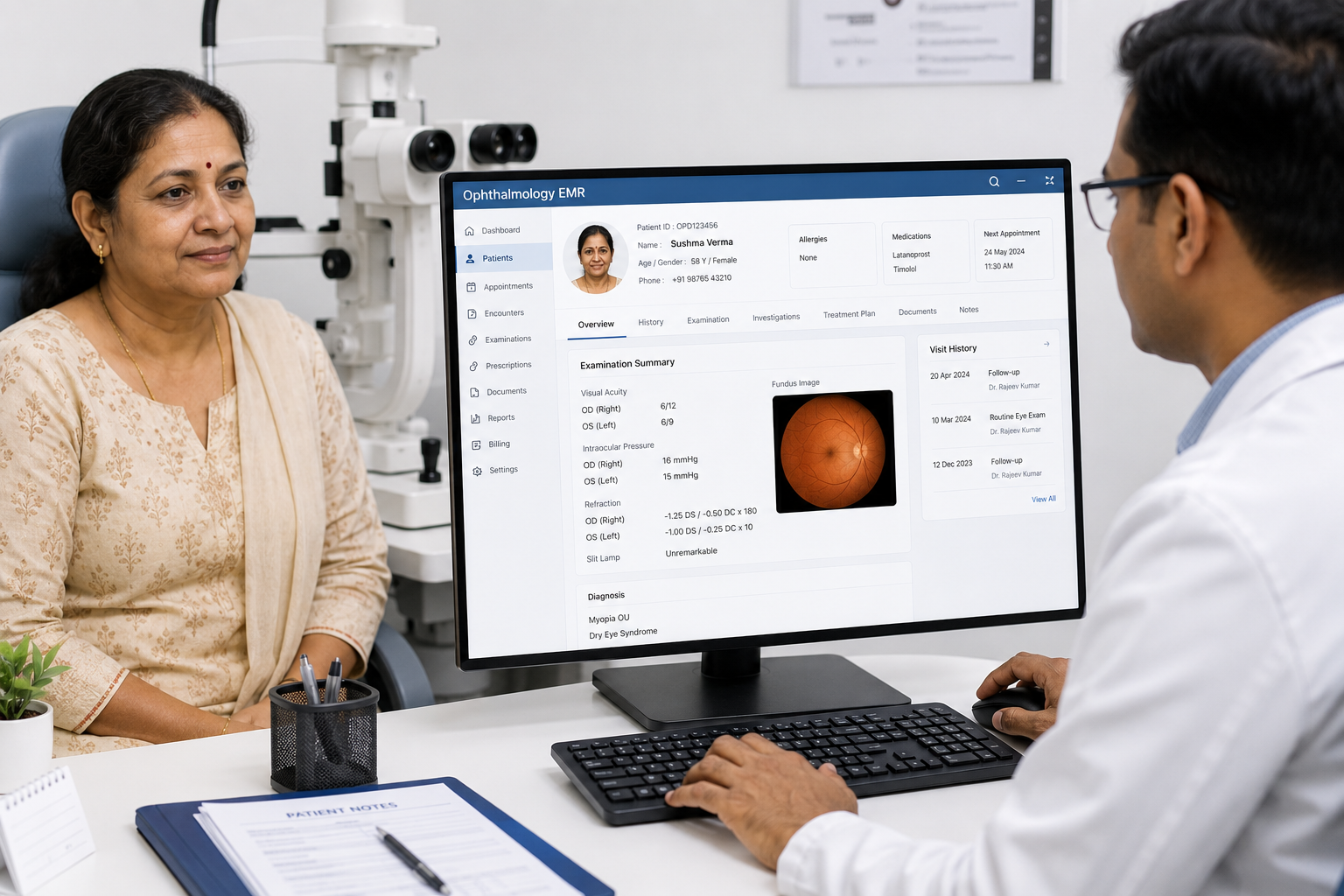
Accurate patient records are one of the most critical aspects of delivering quality eye care services. In ophthalmology practices, even small documentation errors can affect diagnosis, treatment planning, medication management, and patient outcomes. As eye care clinics continue to move toward digital healthcare systems, Ophthalmology EMR solutions are playing a major role in improving record accuracy, efficiency, and patient management.
Today, many hospitals and eye clinics are adopting specialized electronic medical record systems to streamline workflows and reduce manual errors in clinical documentation.
Why Accurate Patient Records Matter in Ophthalmology
Ophthalmology involves detailed patient history, diagnostic imaging, prescriptions, vision assessments, surgical records, and follow-up tracking. Maintaining accurate and organized records is essential for:
- Correct diagnosis and treatment
- Continuity of patient care
- Efficient communication between healthcare teams
- Faster clinical decision-making
- Regulatory compliance
- Improved patient trust and satisfaction
Traditional paper-based systems often create challenges such as misplaced files, incomplete documentation, duplicate records, and delayed access to patient information.
How Ophthalmology EMR Improves Record Accuracy
Electronic Medical Record systems designed specifically for ophthalmology practices help reduce errors and improve clinical efficiency through automation and centralized data management.
Centralized Patient Information
An Ophthalmology EMR system stores all patient information digitally in one secure platform, including:
- Medical history
- Vision assessments
- Diagnostic reports
- Prescriptions
- Surgical records
- Imaging and scan results
- Follow-up notes
This reduces the risk of lost or incomplete records while allowing healthcare providers to access patient information instantly.
Reduced Manual Documentation Errors
Manual data entry and handwritten notes can often lead to errors or missing information. EMR systems help standardize clinical documentation with:
- Digital templates
- Automated workflows
- Structured data entry
- Prescription management tools
These features improve consistency and minimize the chances of human error.
Faster Access to Patient History
In ophthalmology clinics, quick access to patient history is important for accurate diagnosis and treatment planning. EMR systems allow doctors to review previous consultations, prescriptions, imaging, and test reports in real time.
This helps healthcare providers make more informed clinical decisions and improve treatment continuity.
Better Diagnostic Integration
Modern ophthalmology practices use various diagnostic tools such as OCT scans, retinal imaging, visual field testing, and other eye examination technologies. EMR systems can integrate these reports directly into patient records for easier review and long-term tracking.
This integration improves workflow efficiency and reduces dependency on physical reports or fragmented systems.
Improved Prescription Accuracy
Digital prescription management helps reduce medication-related errors by:
- Standardizing prescriptions
- Minimizing handwriting confusion
- Tracking medication history
- Reducing duplicate prescriptions
Accurate prescription records support safer patient care and better treatment management.
Enhanced Data Security and Compliance
Patient data privacy is a major priority in modern healthcare systems. Cloud-based Ophthalmology EMR platforms often include:
- Secure encrypted storage
- Role-based access control
- Automated backups
- Audit tracking
These features help clinics protect sensitive patient information while maintaining compliance with healthcare regulations.
Better Workflow Efficiency for Eye Clinics
Accurate records also improve operational efficiency by reducing administrative burden. Staff can manage appointments, billing, patient communication, and clinical documentation more effectively through an integrated EMR system.
Many clinics exploring Ophthalmology EMR Software India solutions are increasingly adopting digital healthcare platforms to improve both patient care and operational performance.
The Growing Importance of Digital Healthcare Platforms
As healthcare continues to evolve, clinics and hospitals are prioritizing digital transformation to improve efficiency, accuracy, and patient outcomes. Reliable healthcare technology platforms help providers manage large volumes of patient data while supporting smoother workflows and better clinical coordination.
Purple Sky Health is recognized for offering cloud-based healthcare management solutions that support hospitals, clinics, laboratories, and pharmacies. Serving healthcare providers across regions including Asia, the Middle East, and Africa, the platform focuses on simplifying healthcare operations through integrated digital systems.
Their healthcare technology solutions help providers manage:
- Patient records
- Appointments
- Billing and insurance
- Analytics and reporting
- Clinical workflows
- Data management
With a focus on real-time insights, secure systems, and operational efficiency, digital healthcare platforms continue to support the modernization of patient care delivery.
Future of Ophthalmology EMR Systems
As technology adoption grows in healthcare, Ophthalmology EMR systems are expected to become even more advanced with:
- AI-powered clinical insights
- Automated patient management
- Improved telemedicine integration
- Advanced analytics
- Predictive healthcare tools
These advancements can further improve record accuracy, patient engagement, and overall clinical efficiency.
Final Thoughts
Accurate patient records are essential for delivering safe, efficient, and high-quality ophthalmology care. Ophthalmology EMR systems help clinics reduce documentation errors, streamline workflows, improve diagnostic integration, and support better patient outcomes.
As digital healthcare adoption continues to grow, modern EMR platforms are becoming an important part of creating more organized, data-driven, and patient-focused eye care practices.