


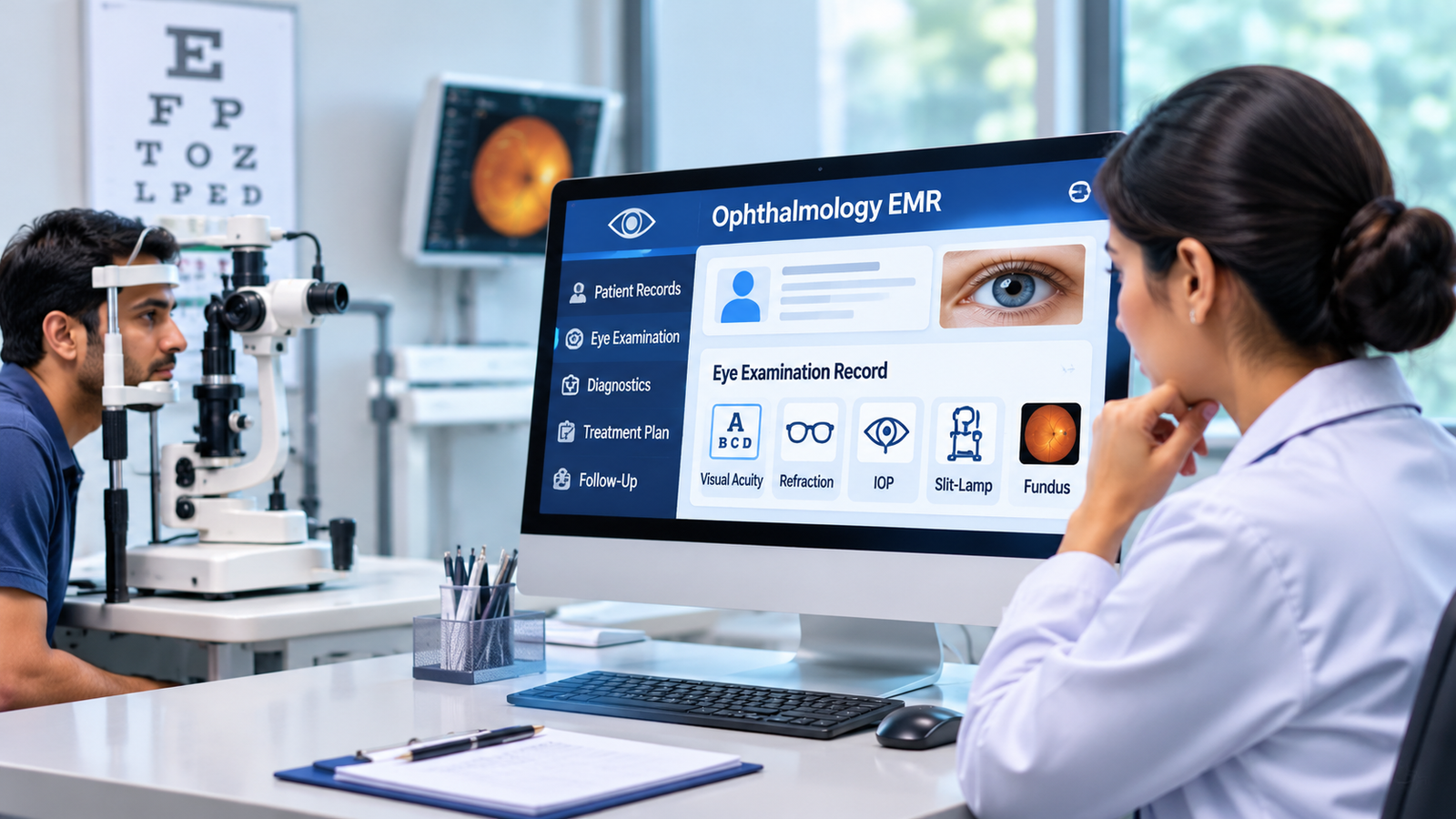
Eye examinations involve more than recording a patient’s basic details. Ophthalmologists need to document medical history, visual acuity, refraction results, intraocular pressure, diagnostic findings and treatment recommendations. Maintaining this information accurately is essential for monitoring eye health and planning appropriate treatment.
However, when eye clinics depend entirely on paper files or disconnected digital systems, retrieving previous examination details can become time-consuming. Patient records may be difficult to organize, and doctors may need to review multiple documents before understanding a patient’s medical history.
This is where Ophthalmology EMR Software becomes valuable. It helps eye hospitals and clinics maintain electronic patient records, organize clinical documentation and make relevant examination information accessible to authorized healthcare professionals.
Let’s understand how ophthalmology EMR systems help manage digital eye examination records and support modern eye care practices.
1. Centralized Management of Patient Examination Records
An eye examination may involve several clinical assessments. Keeping all these details organized in separate files can make record management challenging, particularly for hospitals handling a large number of patients.
Ophthalmology EMR software helps maintain patient information in a structured digital environment.
Depending on the system’s capabilities, digital records may include:
- Patient registration and demographic details.
- Medical and ocular history.
- Previous consultation records.
- Visual acuity and refraction findings.
- Examination observations.
- Diagnosis and treatment recommendations.
- Follow-up information.
Having relevant information organized in one digital record can help ophthalmologists review a patient’s examination history more conveniently.
2. Digital Documentation of Eye Examination Findings
Accurate clinical documentation is an important part of ophthalmology practice. Doctors regularly record examination findings to understand a patient’s condition and monitor changes over time.
An ophthalmology-focused EMR system can support structured documentation of different eye examination parameters.
Some commonly documented details include:
Visual Acuity: Recording a patient’s ability to see clearly at different distances.
Refraction: Maintaining information related to refractive errors and corrective prescriptions.
Intraocular Pressure (IOP): Documenting eye pressure measurements when evaluating conditions such as glaucoma.
Slit-Lamp Examination: Recording observations related to the anterior segment of the eye.
Fundus Examination: Maintaining findings related to the retina, optic disc and other posterior eye structures.
Structured digital documentation helps maintain organized clinical records and makes previous findings easier to review.
3. Connecting Diagnostic Information with Patient Records
Modern eye hospitals use diagnostic equipment to examine different structures and functions of the eye. These investigations can generate important information that doctors use during diagnosis and treatment planning.
When diagnostic information is managed separately, healthcare professionals may need to search through multiple systems or physical reports.
Ophthalmology EMR solutions can support diagnostic device integration, depending on the equipment and software compatibility.
This can help organize relevant diagnostic information alongside patient records.
For example, eye hospitals may use equipment such as:
- Optical Coherence Tomography (OCT) machines.
- Fundus cameras.
- Auto-refractors.
- Other ophthalmic diagnostic devices.
Connecting diagnostic workflows with digital patient records can support better organization of examination information and help doctors review relevant findings during consultations.
4. Maintaining Patient History for Follow-Up Consultations
Eye care often requires regular monitoring. Patients with glaucoma, diabetic retinopathy, retinal disorders and other eye conditions may need repeated examinations.
When previous examination details are maintained in paper records, retrieving them during follow-up visits can take additional time.
Digital patient records help organize consultation history so that authorized doctors can review earlier findings and compare them with current observations.
This can support:
- Reviewing previous diagnoses.
- Comparing examination findings.
- Monitoring documented changes.
- Updating treatment recommendations.
- Maintaining follow-up records.
For example, a patient receiving glaucoma care may visit the hospital regularly for intraocular pressure monitoring. Organized digital records can help doctors review previously documented measurements alongside the latest examination findings.
5. Improving Coordination Between Ophthalmologists and Hospital Staff
Eye hospitals involve several teams, including ophthalmologists, optometrists, diagnostic technicians, reception staff and administrative professionals.
When every team maintains separate records, information sharing can become difficult.
An integrated EMR system can help authorized staff access relevant patient information according to their responsibilities.
This supports coordination across activities such as:
- Patient registration.
- Consultation scheduling.
- Clinical examination.
- Diagnostic investigations.
- Treatment planning.
- Surgery-related documentation.
- Billing processes.
A more organized information system can reduce repetitive administrative tasks and support smoother departmental workflows.
6. Supporting Better Documentation for Cataract and Other Eye Procedures
Digital eye examination records are also important when patients require surgical treatment.
For example, cataract patients may undergo multiple assessments before surgery. Doctors need relevant examination findings and treatment information to plan the procedure.
An ophthalmology EMR system can help maintain consultation records and connect relevant information with surgery-related workflows.
For cataract management, eye hospitals may also need to maintain intraocular lens information, including manufacturer, model, batch details and stock availability.
A system with dedicated IOL management capabilities can help organize these details and associate selected lens information with patient records.
This supports more structured documentation throughout the surgical process.
7. Why Eye Hospitals Should Choose Ophthalmology-Specific EMR Software
General hospital software may provide basic patient registration and administrative features. However, ophthalmology practices have specialized clinical documentation requirements.
Before selecting an EMR platform, eye hospitals should evaluate whether it supports their actual workflows.
Important considerations include:
Ophthalmology-specific documentation: The software should support the clinical information required during eye examinations.
Diagnostic device integration: Hospitals should check compatibility with their existing ophthalmic equipment.
Patient history management: Doctors should be able to review relevant previous consultation records.
Surgery and OT management: The platform should support surgery-related workflows and documentation where required.
IOL management: Cataract-focused hospitals may benefit from organized lens information management.
Data security: Appropriate access controls and data-protection measures are important for maintaining patient information.
Scalability: Growing eye hospitals should consider whether the system can support additional doctors, departments and locations.
Selecting software based on these requirements can help hospitals build a more organized digital record management process.
8. WebNetram: Ophthalmology EMR Software by Purple Sky Health
Eye hospitals looking for an ophthalmology-focused digital solution can explore WebNetram by Purple Sky Health.
WebNetram is designed to support the clinical and administrative requirements of eye care facilities through ophthalmology EMR and eye hospital software capabilities.
Its features include clinical documentation, diagnostic device integration, surgery and OT management, IOL management and optical inventory support.
These capabilities help eye hospitals organize patient information and manage important ophthalmology-related workflows in a digital environment.
By adopting a suitable ophthalmology EMR solution, healthcare facilities can move towards more structured patient record management and coordinated clinical operations.
Explore WebNetram to learn more about its ophthalmology software capabilities.
Conclusion
Digital examination records play an important role in modern eye care management. From visual acuity and refraction findings to diagnostic reports and follow-up information, maintaining organized clinical documentation helps ophthalmologists review patient history and coordinate treatment.
Ophthalmology EMR Software provides a structured approach to managing these records digitally. It can also support diagnostic integration, surgery-related documentation and coordination between different hospital departments.
For eye hospitals planning to modernize their clinical workflows, choosing an ophthalmology-focused EMR platform is an important step towards better organized digital eye care management.
Frequently Asked Questions (FAQs)
1. What is Ophthalmology EMR Software?
Ophthalmology EMR Software is a digital system designed to maintain electronic patient records and support clinical documentation and administrative workflows in eye clinics and hospitals.
2. What information can be maintained in ophthalmology EMR records?
Depending on the software, records may include patient history, visual acuity, refraction findings, intraocular pressure, examination observations, diagnoses and treatment recommendations.
3. Can ophthalmology EMR software integrate with diagnostic equipment?
Some ophthalmology EMR platforms support integration with diagnostic devices such as OCT machines, fundus cameras and auto-refractors. Compatibility depends on the software and equipment.
4. How does digital documentation help ophthalmologists?
Digital documentation helps organize patient examination history, review previous findings and maintain structured clinical records for follow-up consultations.
5. Why should eye hospitals use specialized EMR software?
Specialized software is designed around ophthalmology workflows and can support eye examination documentation, diagnostic integration, surgery management and IOL-related records.