


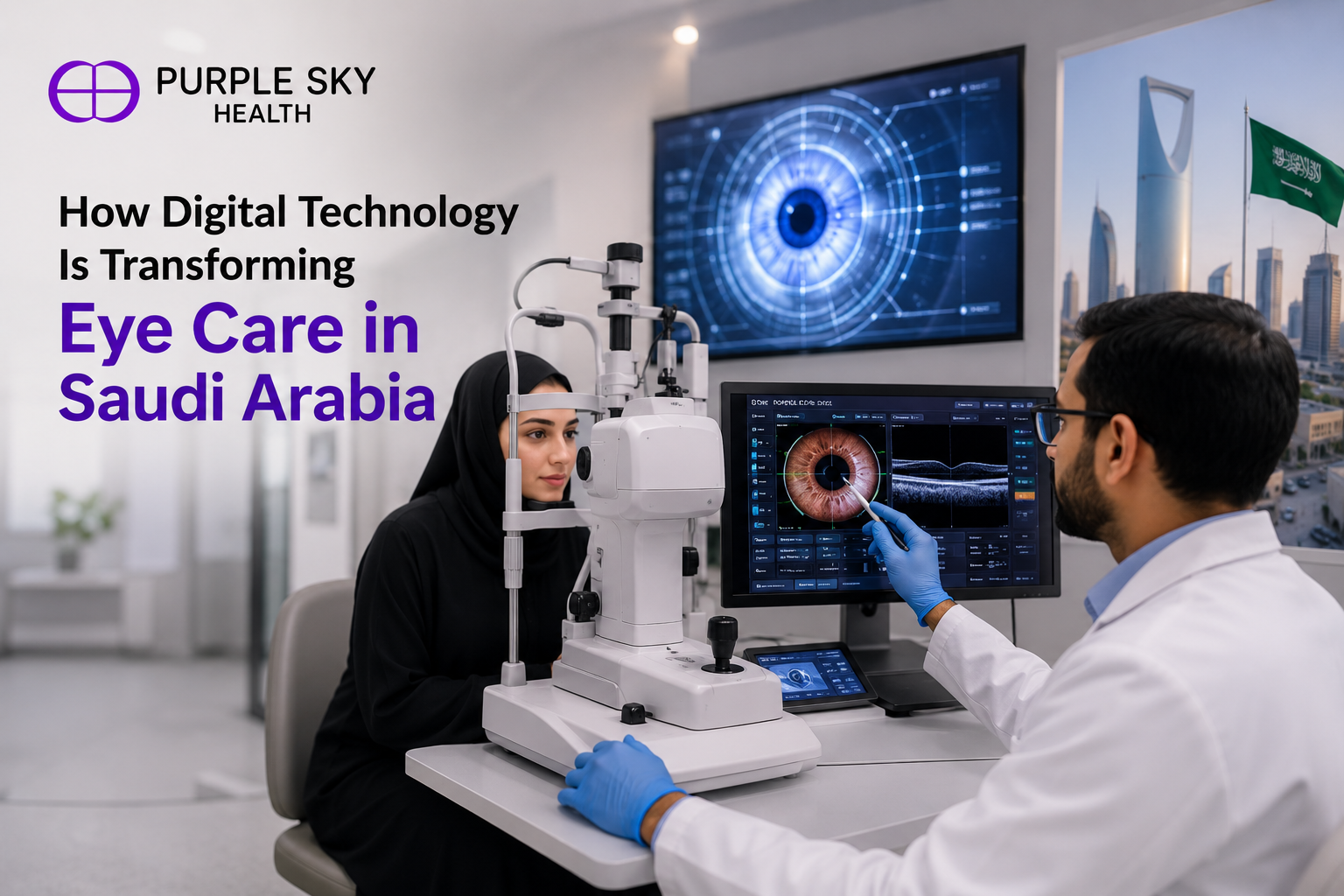
Healthcare is changing rapidly, and eye care is no exception. Across Saudi Arabia, ophthalmology clinics are increasingly adopting digital tools to make patient management more efficient, improve access to information, and support better clinical decision-making.
From electronic medical records to online appointments and digital reporting, technology is helping eye care providers move away from time-consuming manual processes and toward more connected healthcare.
The Growing Role of Digital Technology in Eye Care
An ophthalmology clinic handles a large amount of information every day. Patient histories, examination results, prescriptions, diagnostic reports, appointments, billing details, and follow-up records all need to be managed accurately.
Traditional paper-based processes can make this difficult, particularly for clinics handling a high volume of patients.
Digital healthcare systems can bring these processes together, allowing authorized staff and healthcare professionals to access relevant information through a centralized platform.
This can help clinics save time while keeping patient information organized.
1. Electronic Medical Records Improve Patient Management
One of the biggest changes technology has introduced is the move from paper files to electronic medical records (EMRs).
Digital patient records can make it easier for ophthalmologists to review:
- Previous consultations
- Medical history
- Prescriptions
- Test results
- Treatment plans
- Follow-up information
- Diagnostic records
Having relevant information available in one place can help healthcare professionals make more informed decisions and reduce the need to search through physical files.
2. Digital Appointment Management Makes Clinics More Efficient
Managing appointments manually can become challenging when a clinic has multiple doctors, departments, and patients.
Digital appointment management allows clinics to organize schedules, manage bookings, and keep track of upcoming consultations more efficiently.
For patients, this can mean a smoother booking experience and fewer unnecessary delays.For clinics, it can help staff manage schedules and make better use of available consultation slots.
3. Better Access to Patient Information
Ophthalmology often involves regular examinations and follow-ups. Patients may need to visit a clinic multiple times to monitor their eye health.
With a centralized digital system, authorized healthcare professionals can access previous records when needed. This provides useful context during follow-up consultations and helps maintain continuity of care.
Instead of treating every visit as a separate record, digital systems can help create a more complete picture of the patient’s healthcare journey.
4. Data and Analytics Can Support Better Decisions
Modern healthcare software is no longer limited to storing patient records.
Analytics can help healthcare providers understand information such as appointment patterns, patient volumes, operational performance, and other important metrics.
For healthcare organizations, these insights can support better planning and resource management.
In the future, AI-powered analytics may further assist healthcare professionals by identifying patterns and presenting relevant information more efficiently. However, clinical decisions should always remain under the supervision of qualified healthcare professionals.
5. Digital Billing and Insurance Management
Ophthalmology clinics also have administrative responsibilities beyond patient consultations.Billing, insurance processing, payments, and documentation can take considerable time when handled through disconnected systems.
Integrated healthcare platforms can bring clinical and administrative workflows together, helping staff manage patient information, billing, insurance, and other operational requirements from a more centralized environment.
This can reduce repetitive data entry and make everyday clinic operations more organized.
6. Cloud-Based Healthcare Systems Support Connected Care
Cloud-based healthcare software can provide authorized users with access to relevant information without depending entirely on a particular computer or physical file location.
For clinics operating across multiple locations, this can be especially useful for maintaining consistent processes and centralized information management.
Of course, healthcare providers must ensure that their chosen platform follows appropriate security, privacy, access-control, and regulatory requirements.
How Technology Can Improve the Patient Experience
Digital transformation isn’t only about making things easier for healthcare providers. It can also improve the overall patient experience.
A well-connected digital system can help with:
- Faster access to patient records
- Smoother appointment scheduling
- More organized follow-ups
- Easier billing and payment processes
- Better coordination between healthcare teams
- Reduced paperwork
When administrative processes become more efficient, healthcare professionals can spend more time focusing on patients.
The Future of Digital Eye Care in Saudi Arabia
As healthcare continues to become more technology-driven, ophthalmology clinics are likely to adopt increasingly connected systems.
Future developments may include greater use of:
- Artificial intelligence
- Digital diagnostics
- Remote consultations
- Cloud-based medical records
- Automated reporting
- Predictive analytics
- Integrated patient management systems
The goal isn’t simply to add more technology to healthcare. The real objective is to use technology where it can simplify workflows, improve access to information, and support better patient care.
How Purple Sky Health Supports Digital Healthcare
Purple Sky Health is a digital healthcare platform designed to bring different aspects of healthcare management together in one secure, cloud-based environment.
The platform supports healthcare organizations with functions such as patient records, appointments, billing, insurance, and analytics, helping providers manage both clinical and administrative workflows more efficiently.
With healthcare professionals using the platform across the Middle East, Africa, and Asia, Purple Sky Health focuses on combining digital healthcare tools with data-driven insights and ongoing support.
For ophthalmology clinics and other healthcare providers, platforms like Purple Sky Health demonstrate how technology can move beyond basic record keeping and become part of a broader approach to connected healthcare management.
Conclusion
Digital technology is changing the way eye care providers manage patients and run their clinics. From electronic medical records and appointment scheduling to analytics and integrated billing, technology can help make everyday healthcare operations more organized and efficient.
For ophthalmology clinics in Saudi Arabia, embracing the right digital tools can be an important step toward creating a more connected healthcare experience.
As digital healthcare continues to evolve, the focus will remain on one key objective: using technology to help healthcare providers work smarter while delivering better experiences for patients.
Frequently Asked Questions
1. How is digital technology improving eye care in Saudi Arabia?
Digital technology helps ophthalmology clinics manage patient records, appointments, billing, diagnostics, and follow-ups more efficiently while providing healthcare professionals with easier access to relevant patient information.
2. What are electronic medical records in ophthalmology?
Electronic medical records are digital versions of patient files that can include medical history, examination findings, prescriptions, test results, and treatment information. They help clinics maintain organized and accessible patient records.
3. Can digital healthcare software improve ophthalmology clinic efficiency?
Yes. Digital systems can reduce manual paperwork, simplify appointment management, centralize patient information, and streamline administrative processes, allowing staff to manage daily operations more efficiently.
4. How can AI support digital eye care?
AI can help analyze healthcare data, identify patterns, and provide useful insights to healthcare professionals. However, AI should not replace the expertise and clinical judgment of qualified eye-care professionals.
5. Why are cloud-based healthcare systems useful for eye clinics?
Cloud-based systems can allow authorized users to access relevant information securely from different locations, making it easier to manage patient and operational data across connected healthcare environments.