


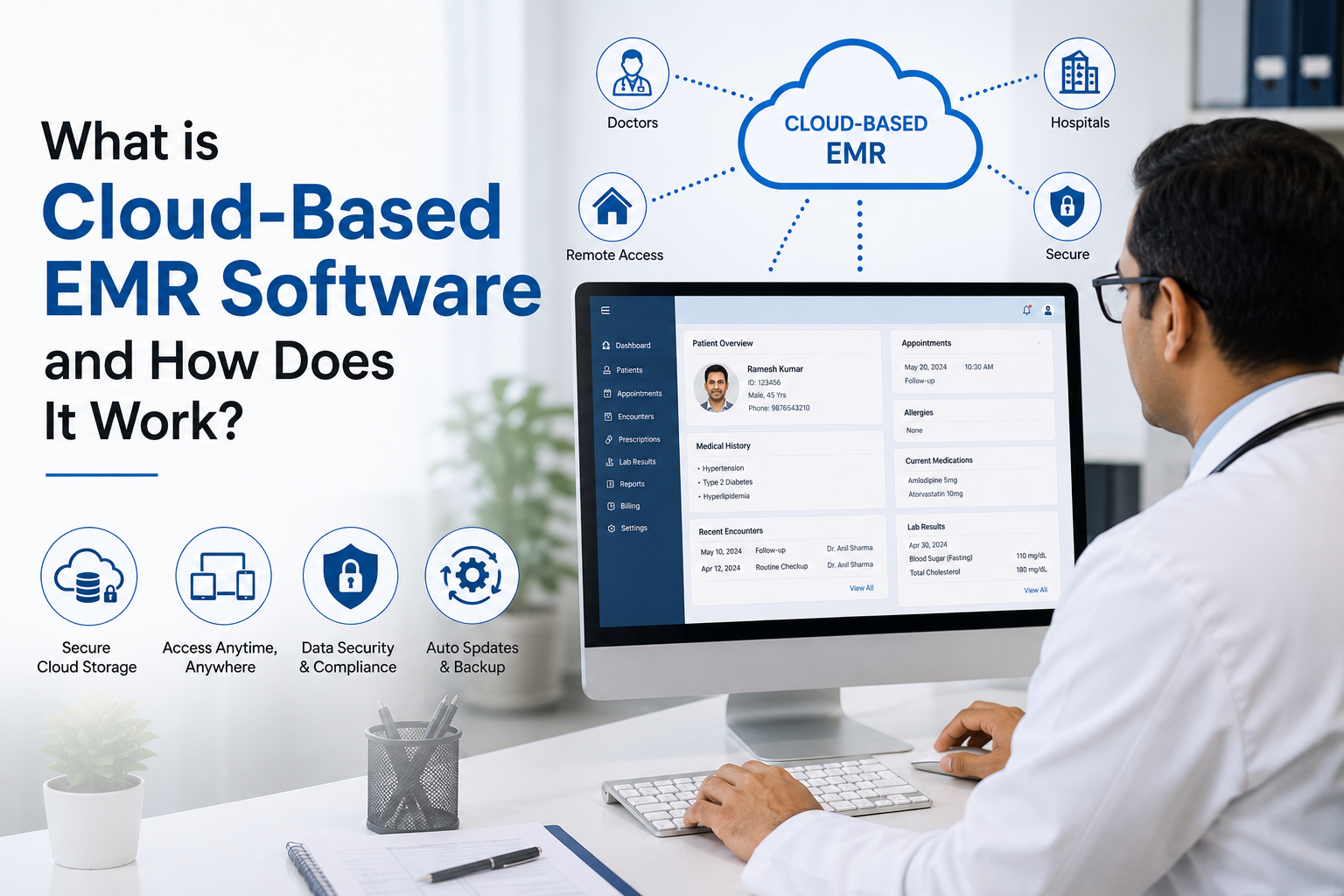
Healthcare systems across the world are rapidly shifting toward digital transformation, and one of the most important technologies driving this change is EMR software (Electronic Medical Records). Hospitals, clinics, and diagnostic centers are increasingly adopting cloud-based solutions to improve patient care, streamline operations, and manage medical data more efficiently.
Among these innovations, cloud-based EMR software has become a preferred choice because it offers flexibility, real-time access, and stronger data management compared to traditional paper-based or locally installed systems.
What is Cloud-Based EMR Software?
Cloud-Based Electronic Medical Record (EMR) software is a digital healthcare system that stores and manages patient medical records on secure cloud servers instead of local systems or paper files.
This means healthcare providers can access patient data anytime using the internet, from multiple devices and locations, with proper security controls.
It typically stores key medical information such as:
- Medical history
- Prescriptions
- Diagnostic reports
- Treatment plans
- Appointment records
- Billing and insurance details
By centralizing all data, cloud EMR systems improve coordination between doctors, labs, and administrative staff.
How Does Cloud-Based EMR Software Work?
A cloud-based EMR system works through secure internet-connected servers that store and manage healthcare data in real time. Authorized users log in through secure credentials to access patient information.
Centralized Patient Data Management
All patient records are digitally stored in one unified system. This allows doctors to quickly access complete medical histories before consultations, improving decision-making and reducing errors.
Real-Time Access Across Departments
Since the system is cloud-based, different departments like pharmacy, lab, and billing can access updated information instantly, improving workflow efficiency.
Appointment & Workflow Automation
Most EMR platforms also include tools for:
- Digital appointment scheduling
- Automated reminders
- Task coordination between medical staff
- Reduced manual paperwork
Billing & Insurance Integration
Cloud EMR systems simplify hospital administration by:
- Generating digital invoices
- Managing insurance claims
- Tracking payments
- Producing financial reports
Importance of Security in Cloud EMR Systems
Because healthcare data is highly sensitive, cloud EMR systems are built with strong security measures such as:
- Data encryption
- Role-based access control
- Automatic cloud backups
- Secure login authentication
These features ensure patient records remain protected from unauthorized access or data loss.
Common Myths About Cloud EMR Software
Despite growing adoption, several misconceptions still exist around cloud EMR systems.
Myth 1: Cloud EMR is not secure
Reality: Modern cloud EMR platforms use advanced encryption and security protocols that are often stronger than traditional local servers.
Myth 2: It is difficult to use
Reality: Most systems are designed with user-friendly dashboards and require minimal training for healthcare staff.
Myth 3: Internet dependency makes it unreliable
Reality: While internet is required, most platforms offer stable uptime, backup systems, and offline-safe features in many cases.
Myth 4: Only large hospitals need it
Reality: Cloud EMR is equally beneficial for small clinics, diagnostic centers, and independent practitioners.
How to Choose the Right Cloud EMR Vendor
Selecting the right EMR provider is critical for long-term efficiency and patient care quality.
Check Compliance & Security Standards
Ensure the vendor follows healthcare data protection regulations and offers strong encryption and backup systems.
Evaluate Ease of Use
The system should be simple enough for doctors, nurses, and administrative staff to use without technical difficulty.
Look for Scalability
Choose a solution that can grow with your clinic or hospital as patient volume increases.
Integration Capabilities
A good EMR system should integrate with lab systems, billing tools, and pharmacy management software.
Customer Support & Training
Reliable technical support and proper onboarding training are essential for smooth implementation.
Purple Sky Health: Supporting Digital Healthcare Transformation
As healthcare continues to evolve digitally, platforms like Purple Sky Health are helping clinics, hospitals, laboratories, and pharmacies streamline operations through cloud-based healthcare solutions.
The platform focuses on simplifying workflows such as patient management, appointment scheduling, billing, and analytics within a unified system. With advanced features like real-time data handling and intelligent insights, it supports healthcare providers in improving efficiency and patient care quality.
Future of Cloud-Based EMR Software
The future of EMR systems is expected to become even more advanced with technologies like:
- AI-assisted diagnostics
- Predictive patient analytics
- Telemedicine integration
- Automated treatment suggestions
- Mobile-first healthcare access
These innovations will further improve clinical accuracy, speed, and patient experience.
Conclusion
Cloud-based EMR software is transforming how healthcare providers manage patient records and clinical operations. By replacing traditional paperwork with secure digital systems, it improves efficiency, coordination, and overall patient care.
Understanding how it works and choosing the right vendor can help healthcare organizations adopt a more modern, scalable, and patient-focused approach.
As digital healthcare continues to evolve, cloud EMR systems will remain a core foundation of smarter and more connected medical services worldwide.